
The Treasure of Serooskerke


In the clay heart of Walcheren, between Middelburg and the dunes of Vrouwenpolder, lies Serooskerke: a small village around a fifteenth-century church tower, a few farms and ribbon building along the road. As early as 1196 it is called Alarstkerke. It is a village like others on the island, but for one thing. For in Zeeland people have told of hidden treasure in the ground since time out of mind, and nowhere did that old telling come true so literally as here. Twice, in 1966 and in 1979, the soil of Serooskerke gave up a hoard of coins, and ever since the village has had a swimming pool called De Goudvijver, the Gold Pond.


1 Hidden treasure in the Zeeland soil
In the folk tales of Zeeland the motif of hidden treasure returns again and again. The Encyclopedie van Zeeland counts it among the international stock of stories: underground passages, lost valuables and sunken images that are never found again. It is told that the nuns of a convent near Zierikzee fled before an enemy raid through a passage, carrying twelve man-high silver apostle figures, until the passage collapsed and sisters and figures alike were buried underground. Near Veere too, in the dyke, and between Yerseke and Kapelle, such images are said to lie still. Who first told them can no longer be traced.
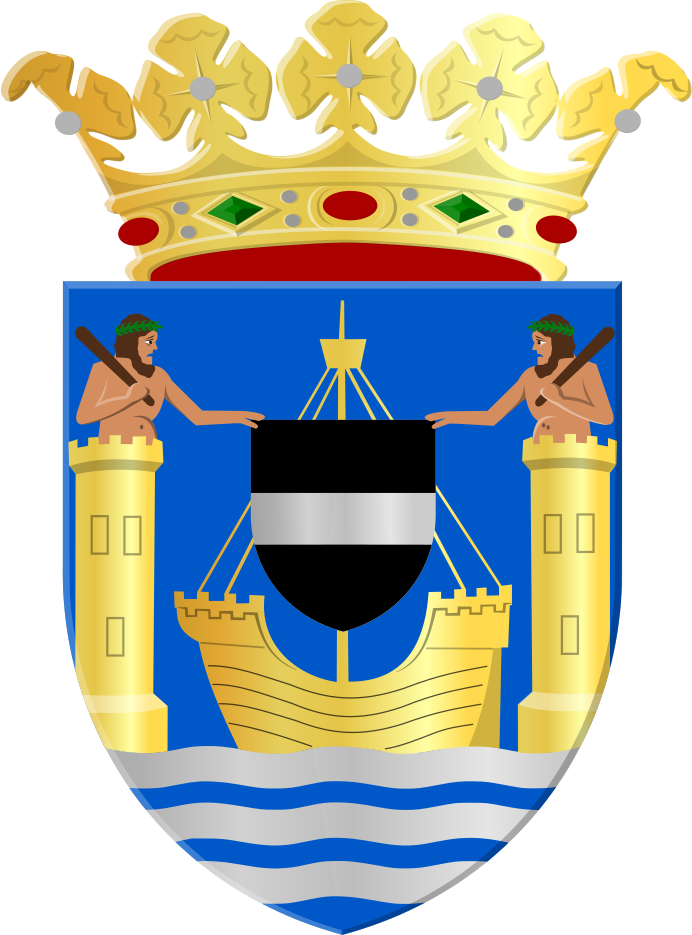
Serooskerke fits into that landscape of rumour. The village is old: pottery from the middle Iron Age points to settlement around five hundred before Christ, and in the Middle Ages a convent stood here, named Zoetendaal. From the thirteenth century on, fifteen lines of lords and ladies of the manor held the village, among them the family Van Tuyll van Serooskerke. The old village arms showed a church surrounded by roses.
And yet, where such treasure stories usually remain stories, Serooskerke twice had the proof placed in its hands. The Encyclopedie van Zeeland notes it drily among the legends: the tales of hidden treasure became reality here through the important coin finds of 1966 and 1979. No ghostly vision and no apostle of silver, but real gold and real silver, dug from the Walcheren clay.
2 1966: the gold beneath the leek field
In 1965 a few houses on the edge of the village were demolished and a leek field laid out on the cleared ground. Working the soil that year brought up one hundred and eighteen coins. In the autumn of 1966, at the leek harvest, more than a thousand more were dug up. The farmer Piet Christiaanse received the Queen’s Commissioner and the mayor as visitors; the gold reached the national press.
The scholarly guidance lay with Hendrik Enno van Gelder, director of the Royal Coin Cabinet in Leiden. He called it the largest coin find of the twentieth century. The auction catalogue counted 1023 pieces from the period 1422 to 1622; with the later finds the whole came to one thousand one hundred and fifty-seven gold coins and a single false one of copper. The youngest, the closing coin, was a half golden rider struck at Middelburg in 1622. Some six kilos of gold, from all over Europe and even from Morocco.
Who buried the treasure, and why, remained guesswork. Between 1574 and 1622 there was no war on Walcheren; the island was reckoned the safest in the Republic. Most likely it was simply the savings of a wealthy man, put into the ground in an age without banks and never fetched again. The municipality of Serooskerke, owner of the land, kept fifty pieces and sold the rest. From the proceeds, well over half a million guilders, the village built a swimming pool and a medical centre. The pool was given the name De Goudvijver.
3 1979: the silver and what the village keeps
Thirteen years later the soil gave again. In 1979, during the demolition of the hotel De Lindeboom near the church, about eight hundred and fifty silver coins came to light. They were assigned to the municipality of Veere, to which Serooskerke by then belonged. The find brought a fair amount of unrest over who had a claim to it, but the silver was kept.
So the old treasure legend in Serooskerke gained a tangible sequel that few villages can match. On the square along the Vrouwenpolderseweg, circles have been set into the paving that represent the coin finds. The fifty finest gold pieces are managed by the Zeeuws Archief, in the collection of the municipality of Veere, and are no longer a legend but museum pieces.
The village itself stayed small and Walcheren-like: the fifteenth-century tower of the Johanneskerk above the ribbon of houses, the corn mill De Jonge Johannes of 1835 at the edge, and in the middle of it a swimming pool that recalls gold. The treasures of Serooskerke prove what the Encyclopedie van Zeeland soberly states: that a folk tale is sometimes grafted onto a small, hard fact. Here that fact lay beneath a leek field, and it was made of gold.
- The Headless Calf of Arnemuiden · Arnemuiden
- The Witch of Veere · Veere
- The Painting of Our Lady of the Polder · Vrouwenpolder

Heimweer.be · Europees Erfgoed Bewaard

