
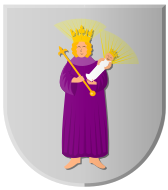
The Painting of Our Lady of the Polder


Where Walcheren opens northward to the Veerse Gat lies Vrouwenpolder, a dike village on land that people themselves wrested from the sea. The village owes its name to Our Lady, and to a small painted panel that once brought emperors and counts here on pilgrimage. For centuries it drew pilgrims from half of Europe, until war and flood drove it out of the polder. The painting vanished, wandered to Bruges, and was only rediscovered by chance in the twentieth century. This is the story of Our Lady of the Polder, one of the most remarkable pilgrimages Zeeland has ever known.


1 A chapel on the appointed spot
Before 1299 Wolfert van Borssele, lord of Veere, had the wide salt marshes north of Serooskerke diked in. The reclaimed land was called simply the Polre, the new polder. Those who settled there lived too far from the existing churches, and so it was decided to build a church of their own in the middle of the new land, dedicated to Mary. Wolfert II had a chapel raised there in 1314, which in 1324, with the consent of the abbot of Middelburg, was elevated to a parish church. Thus arose the name Onze Lieve Vrouwe Polder, later shortened to Vrouwenpolder.
An old legend attends the building, recorded by the chronicler Jan van Reygersbergh in 1551. Timber and stone had been bought, but on the right spot no one could agree. Then pious villagers saw great lights burning by night at a certain place in the polder. There, they believed, heaven wished the church to stand, and there it was built around 1340. Such lights are told of at other shrines as well; here they counted as the first sign that this place had been chosen for veneration.
2 The painting a stranger finished
The second legend explains the fame of the village. The parish was poor and the little church bare; not even an image of its patroness hung within. A devout inhabitant therefore took a blank panel to a well-known painter in Middelburg, one Master Willem, asking him to paint an image of Mary upon it. But the work would not succeed, and the half-painted panel stood forgotten in a corner of the workshop. On a cold winter evening a young, unknown journeyman knocked, asking for work. Master Willem let him complete the commission. The stranger withdrew, and when the master looked in around midday the painting was finished and perfect, while of the young man no trace remained. He had refused all payment, for it had been made, they said, not by human hands but by a miracle.
With that story the panel was held holy and carried in great honour to Vrouwenpolder. After 1400 the village grew into one of the most famous places of pilgrimage in the Low Countries. Around Easter 1416 Emperor Sigismund, king of Hungary and Bohemia, and Count William VI of Holland and Zeeland sailed over from England; when their ship lay becalmed for days, they vowed to eat no meat and drink no wine until they had made their pilgrimage to the Polder, whereupon the wind rose again. Philip the Good, duke of Burgundy, visited the shrine in 1437. Spanish, Portuguese and Breton sailors too called on Our Lady of the Polder for calm weather and a safe homecoming.
Every year on 15 August, the feast of the Assumption, the painting was carried in solemn procession around the polder. The cures that followed were written into a book of miracles, and the church hung full of votive offerings from rescued seafarers. Pilgrims bought leaden badges as keepsakes, one of which was later found in the drowned village of Nieuwlande. A monastery even rose here, Het Heilige Graf, home to canons regular; street names such as Pelgrimstraat, Kloosterstraat and Monnikendijk still recall that age.
3 The wandering to Bruges and back
Fortune turned in 1494, when a heavy storm tide broke the dikes. Church and painting vanished beneath the waves. Around 1500 the house of worship was rebuilt, and the lost panel was replaced by a new one, painted in the manner of the Antwerp master Quinten Metsijs, this time a Mary without her child. The veneration simply continued, and even imposed penitential pilgrimages from Middelburg still led to the Polder.
The iconoclastic fury of 1566 spared Vrouwenpolder, but in 1572, during the siege of Middelburg, soldiers from Veere set the church ablaze. The painting was saved just in time and, after wanderings, came into the hands of the Walcheren family Van Borssele van der Hooghe. The Catholic branch of that house later settled in Bruges and took the panel with them. In the polder no veneration remained; the village turned Reformed, and the old church was rebuilt in 1622 as a plain hall church.
For almost four centuries the painting lay forgotten, until in 1926 it was rediscovered in the collection of Baron Van Caloen at Bruges. More than three hundred Zeelanders followed it that year in a Bruges procession. In 1931 the baron gave it to the parish of Middelburg, where it hangs to this day; it survived even the bombardment of 17 May 1940, because the priest carried it out of the city in time. After the liberation pilgrimages returned, above all of scouts. In Vrouwenpolder itself only a piece of wall beside the Pelgrimskerk remains of the old chapel, yet in the village arms Our Lady still bears her child, one of only two true saints’ arms in all Zeeland.
- The Treasure of Serooskerke · Serooskerke
- The Witch of Veere · Veere
- The Willibrord Well of Zoutelande · Zoutelande

Heimweer.be · Europees Erfgoed Bewaard

