
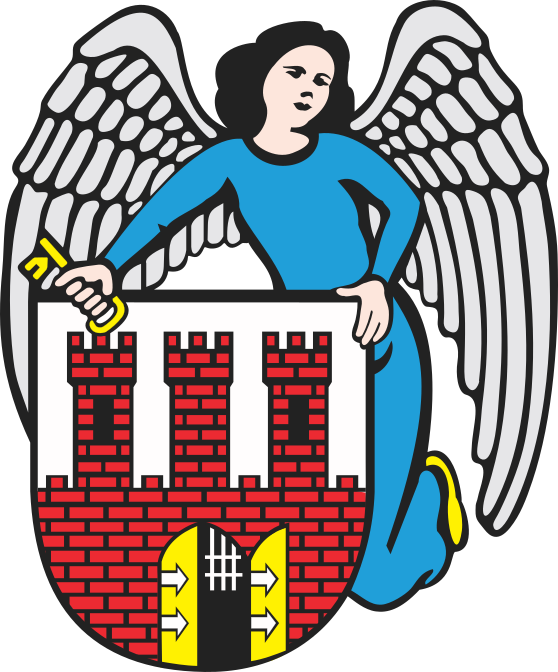
How Toruń Got Its Name


Ask in Toruń (Thorn) where the name of the town comes from, and you will get not one answer but a whole series. The old chroniclers of Prussia knew at least five, and they wrote them down calmly one after another without choosing. Here they are, in the order in which they were told.


1 The Roman and the temple of Venus
It is generally held that the knights of the Teutonic Order built the town. Yet one legend pushed its origin much further back, to the year 725. At that time a noble and mighty Roman general named Thorendus is said to have defeated the old Prussians and brought them under the rule of his fatherland. On the Vistula he built a town and named it after himself: Thorn.
In that town he had a precious temple raised to his goddess Venus, whom he called Barthenia. It is said to have stood for more than five hundred years. Grässe later suspected that the strange name came from the Greek word for maiden, parthenos.
Inside stood her image, and the legend describes it down to the smallest detail. She was a lovely maiden with a snow-white body, her hair swept back and falling to her knees. On her head lay a wreath of myrtle wound with red roses, and between her lips she held a closed rose. Her side was open, so that her heart could be seen, and from that heart shot rays of flame. In her left hand she carried a globe, in her right three golden apples. She stood on a golden chariot drawn by two white doves and two swans. Beside her stood three maidens, arms linked, and each of them handed the other two a golden apple.
2 Thor under the oak, and an old man by the river
According to another legend, the town owes its name to Thor, the heathen god of the north. He was said to have been worshipped here beneath an oak, and around that tree a stronghold had been built. The Teutonic Order captured it and kept the name.
But the Toruń of today, the story goes on, is not the old one. Grand Master Hermann Balk had a town built on that spot in 1231, and because it was flooded every year, a second town of the same name was founded a mile further on. The ruins of old Thorn still lie in the ground, and people believe the place is haunted.
From that same first town comes the third explanation. When the brothers of the Order began to build it on the right bank of the Vistula, an old man came to watch. He shook his head and reproached them for their folly: how could they set a town so low beside so strong a river? Folly was Thorheit in the German of the time, and from that word Thorn is supposed to come. Every spring the water proved the old man right once more.
3 A tower and a battle cry
Others again thought the name came from a tower. In Old Thorn there stood at the time, by the church of Saint John, a particularly fine tower, and for that reason the town was supposedly also called Turrea in Latin. So it is written in Albert Krantz, in the sixth book of his Vandalia.
The last explanation takes us into the middle of battle. When the brothers of the Order stormed a Prussian castle, they are said to have spurred on their men with the cry “Thor an!”, straight at the gate, for Thor meant gate in the old German. That cry, it is said, stuck to the place.
It has a little twin. Two miles from Old Thorn, on the Polish side of the Vistula, lies the small town of Fordon, then called Fordan and today a district of Bydgoszcz. There too, it is told, the Germans drove their men forward during the conquest with “Fort an!”, onwards, and there too the cry remained as a name.
Which of the five is the true one, the legend does not say. It lays them side by side, the Roman and his goddess, the god beneath the oak, the mocking old man, the tower and the battle cry, and lets the town on the Vistula carry them all.
- The Raftsman and the Frogs of Toruń · Toruń
- The Golden Apple of Nakło · Nakło nad Notecią
- Piast and the Two Strangers · Kruszwica

Heimweer.be · Europees Erfgoed Bewaard

