
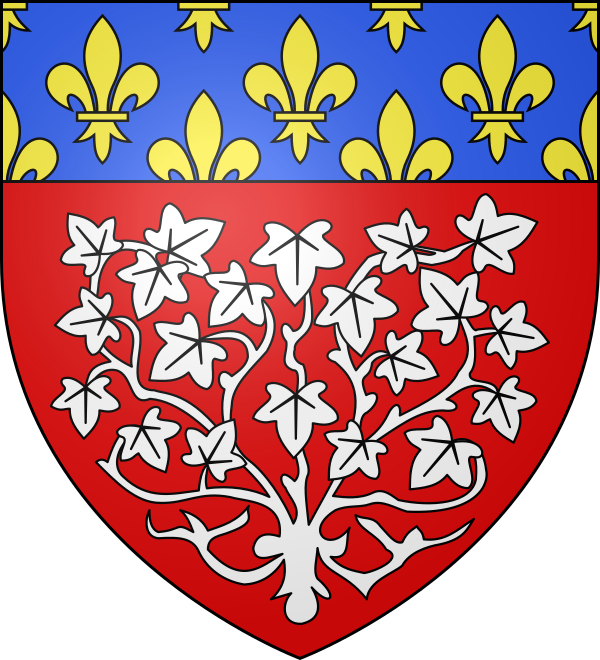
The Cloak of Saint Martin at the Gate of Amiens


At the gate of Amiens, in the bitterest frost of a Picard winter, a young Roman cavalryman cut his cloak in two and gave half away. Out of that single gesture came a saint, a relic and two entirely ordinary words: chapel and chaplain. The story is told in the «Vita sancti Martini» of Sulpicius Severus, written down about 397, while Martin was still alive.


1 The horseman and the beggar
Martin was born in Pannonia, in present-day Hungary, the son of a Roman tribune. His father had him enrolled young in the imperial army; he served as a cavalryman, and in the winter of about 334 his unit was stationed at Ambianum, Roman Amiens. That date is a reconstruction: even Martin’s year of birth is uncertain, and historians hesitate between 316 and 336.
At the city gate sat a half-naked beggar. The cold that winter was so severe, Sulpicius Severus writes, that people froze to death in the street. The passers-by walked on. Martin had nothing with him but his armour and his military cloak. He drew his sword, cut the cloak in two and laid one half around the man’s shoulders.
Why half and not the whole? Because the cloak was not entirely his. The outer part of a soldier’s cloak was issued by the army; only the lining was paid for by the soldier himself. Martin gave away what belonged to him and kept what belonged to the state. The bystanders laughed at the man in the mutilated garment; others, Severus notes, were ashamed at having done nothing themselves.
2 From cappa to chapel
In the night that followed, Martin saw Christ in his sleep, wrapped in that same half of cloth. And Christ said to the angels around him: Martin, still only a catechumen, has clothed me with this. Martin was indeed not yet baptised at the time. He was baptised soon afterwards and left the army some years later.
The half that was kept — the cappa — became, centuries later, the chief relic of the Frankish kings. They carried it into the field in a tent that came to be called capella after the cloak, and the priest who guarded it was the cappellanus. When the relic later rested in palace oratories, those rooms too were called capella.
So a halved army cloak became a word: capella turned into chapelle, Kapelle, chapel, kapel; cappellanus into chaplain, chapelain, Kaplan. Every village chapel in north-western Europe bears the name of a garment that was cut in two at a city gate in the fourth century. Martin himself later became bishop of Tours, where he was buried in 397.
3 What is true, and what remained
To be honest: the Vita sancti Martini is not a biography. Sulpicius Severus was an admirer who knew Martin personally and who deliberately drew him after the model of the biblical prophets and the desert fathers. He wrote to make a saint, not to document a life, and for the cloak episode there is not a single independent source. What we have is one witness, and that witness was a partisan.
That does not make the story worthless, but it makes it something other than history. It is the oldest and most influential piece of Christian hagiography in the Latin West, circulating before its hero was even dead, and it shaped the European imagination of charity for close to sixteen centuries.
The gate is gone. What Amiens does have is the cathedral of Notre-Dame, begun in 1220 and the largest in France by interior volume: a good 200,000 cubic metres under vaults 42 metres high, a World Heritage site since 1981. And every year on 11 November, from Amiens to Flanders and the Rhineland, children walk the streets with paper lanterns. They sing for a piece of bread or a tangerine, mostly without knowing that they are acting out the shortest possible summary of a story about sharing at a gate in the frost.

Heimweer.be · Europees Erfgoed Bewaard

