
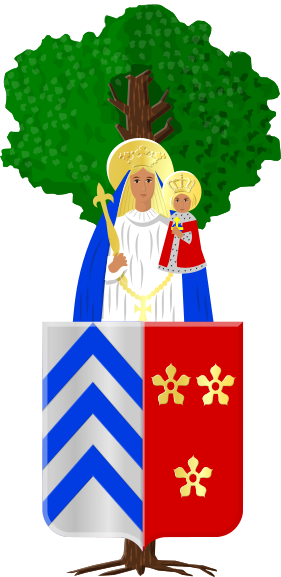
The Night of Our Lady


It was in the years of malice and religious fury that Scherpenheuvel faced its greatest trial. On a dark night the iconoclasts came — the image-breakers — to the holy hilltop intent on destruction. But what happened that night would change the history of the place forever and stir the hearts of millions of pilgrims for eternity.


1 Years of fury
In the early sixteenth century, the Low Countries had known no peace. The Reformation had swept across the land like lightning, sowing division between Catholics and Protestants. In some places it was a matter of faith; in others a question of politics and power. But in many cities it escalated to violence. Images of saints were destroyed, churches plundered, and priests who would not renounce their faith were driven out or worse.
This phenomenon, the iconoclasm, took many forms. Sometimes it was religious fanatics acting out of genuine conviction. But just as often it was merely looters using religion as a cover for their destructive lusts. Houses were stripped, precious artworks destroyed, and communities torn apart.
Scherpenheuvel, quiet and pious, knew that danger was approaching. Pilgrims had come for years to venerate the miraculous image of Mary that stood on the hill. That image — small, old, and full of grace — was the heart of the place. And it was precisely what the iconoclasts sought to destroy.
2 The warnings
The inhabitants of Scherpenheuvel had received warnings. Travelers brought news of bands of iconoclasts moving from place to place, destroying and burning. Each night the people prayed in the chapel, surrounding the image of Mary. ’Protect us,’ they prayed. ’Protect your holy image.’ The villagers slept fitfully, sensing that something terrible was coming.
And indeed, on a quiet summer evening, as the sun set and the sky turned red as blood, they arrived. Not on foot, but on horseback. A group of at least thirty men, all armed, all furious. They carried tools to tear down and destroy. As they rode up the hill, they cried out ’Death to the idols! Death to Mary!’ Their voices echoed off the rocks.
The villagers locked themselves in their houses. The priest took the image of Mary and carried it to the altar, fear in his heart, but determined. And then, as the iconoclasts drew near the chapel, something impossible happened.
3 The night of wonders
Eyewitnesses would later report what they saw. At first it was subtle — a light that seemed to come from nowhere. It rose from the hilltop like golden mist. It grew brighter and brighter until the light was so intense that the mounted men had to stop. They could not see beyond their own palms.
Then something even more inexplicable occurred. The men said later that they were “held fast” — not by hands or ropes, but by something invisible that held them. They tried to drive their horses up the hill, but the animals refused, bucking and screaming, their eyes wild with fear. The riders fell from their horses. Some said they heard a voice — soft, but irresistible — commanding them to turn back.
The mist grew thicker. Men who had been in the same spot disappeared from each other’s sight. The group disintegrated. Those who tried to retreat could not find their way and wandered lost and confused on the hilltop. Some panicked. The night became a nightmare of wonder and fear.
4 The morning of grace
When the sun rose — soft, gold, and careful — it was all over. The mist had vanished. The iconoclasts were gone — all of them. They had fled in all directions when darkness broke, their horses in panic, their courage lost. A number were caught by villagers who — curiously enough — did not attack them, but only asked what they had seen.
And the image of Mary? It still stood where it belonged, unscathed, unharmed. Not a hair on its head was disturbed. Some said that after the event it seemed to glow more intensely, more grace shining from the face of stone and wood.
The riders who could be questioned told stories that were sometimes contradictory, but all had the same theme: compelling force, confusion, fear, and finally the realization that what they were attempting to do went against heavenly will. Many were converted that night. Some said Mary had appeared to them; others said angels had held them fast. Whatever it was, no one doubted the sanctity of Scherpenheuvel anymore.
The Night of Our Lady was etched into the memory of the place as the moment when Mary herself defended her sacred sanctuary. And ever since, millions of pilgrims have come to Scherpenheuvel — not in spite of what happened that night, but precisely because of it. For a goddess who defends herself, a mother who protects her sanctuaries, inspires not fear, but love.
- The Holy Oak becomes a Basilica · Scherpenheuvel
- The Eagle’s Shot · Aarschot
- The Star Well · Boutersem

Heimweer.be · Europees Erfgoed Bewaard

