
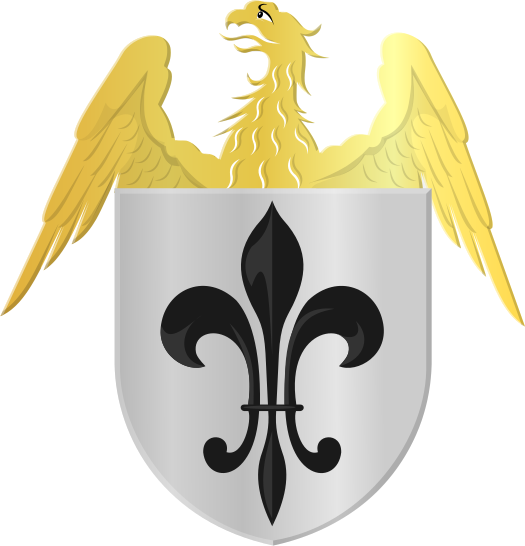
The Eagle’s Shot


In the most glorious days of the Roman Empire, Julius Caesar himself sought the hills of Hageland for a princely hunt. Unaware that this hunt would lead to the founding of a city that would stand for centuries. Aarschot — whose name derives from “Arendschot,” the eagle’s shot — was born in the moment when an arrow tore through the sky and brought down a precious bird from heaven.


1 The Hunt in Hageland
In the most glorious years of the Roman Empire, Julius Caesar himself traveled to the legendary lands of Hageland. Bringing with him a retinue of huntsmen and his nephew Aurelianus, a young man of growing fame, Caesar positioned himself upon the hills that rose above the Demer valley. The view was spectacular: green forests stretched toward every horizon, and the river wound below like a silver serpent.
Caesar was not hunting merely for sport — that would have been far too ordinary for a man of his power. No, he sought something far rarer: the royal eagle, the bird of the gods, said to nest only in these rugged hills. The eagle was a symbol of imperium, of dominion, of divine favor. Whoever could bring down such a bird would claim the blessings of the gods.
2 The Eagle’s Shot
The moment came when the sun stood at its zenith. Caesar, bow drawn and arrow nocked, saw the eagle appear above the valley. The bird flew majestically, its wings spread like the arms of a god. Without hesitation, Caesar released his arrow. The arrow shot through the air like lightning, aimed directly at its mark.
It was a perfect shot — not through the heart, but through the eagle’s face, directly in the beak. The eagle stumbled from the sky, its glory shattered, and fell into the deep valley below. But for Caesar, this was not the end of the story — merely the beginning. Aurelianus, the nephew, saw where the bird had fallen and without any hesitation, spurred his horse downward, through the forests, straight to the place where the dead eagle lay.
3 The Reward and the Founding
Aurelianus reached the far bank of the Demer and returned with the dead eagle in his arms. It was a moment of great significance — the nephew of Caesar had proven his courage and obedience. Caesar, moved by this act of devotion, did something unprecedented. He gave his nephew permission — no, more than that — he gave him a command — to build a fort upon those hills, a bastion of Roman might.
Aurelianus took his charge to heart. Upon the hills where Caesar had shot the eagle, he built a strong Roman fortress — the Aurelianustoren, originally constructed with stone and determination. Around this tower grew a settlement, and around that settlement eventually grew a city. The place took the name it still bears today: Aarschot, derived from “Arendschot” — the eagle’s shot, where the eagle fell from heaven.
And though the centuries have changed much, Aurelianus’ tower still stands on those hills. Recently, in 2025, archaeologists found Roman artifacts and fragments buried beneath Aarschot — silent witnesses to a legendary shot that founded an empire.
- The Cobblestone Stampers · Aarschot
- The Ghost of the Boundary Stone · Aarschot
- The Ghost Dog of Booienhoven · Tienen

Heimweer.be · Europees Erfgoed Bewaard

