
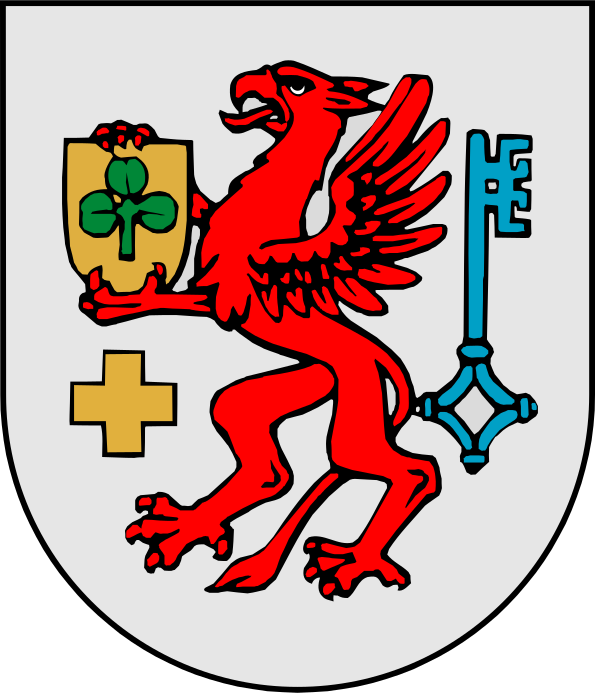
The Golden Key of Belbuk


Just north-west of Trzebiatów (Treptow an der Rega), on a hill on the right bank of the Rega, there once stood the mighty and wealthy abbey of Belbuk (Belbog). Anyone who came to look in the days of our source saw only a few poor labourers’ cottages. And one old wall. About what lies hidden beneath that wall, people have whispered for centuries.


1 The abbey on the hill
In its day Belbuk was a great house. The Premonstratensians, canons regular in white habits, had lived there since the end of the twelfth century, when Duke Casimir I of Pomerania founded the abbey. It owned villages and fishing rights on the Rega, and its abbots counted for something in the land. But in 1534 the abbey ceased to exist. The buildings decayed, a lightning strike set the abbey church on fire, and the tower that was left standing finally collapsed.
What people later saw on the spot was little. A handful of day labourers’ cottages, where cloister and church had once stood. And a single old wall, still upright amid the grass. It was said to belong to the monks’ former dining hall, the refectory where the brothers had once taken their meals in silence at long tables.
At that very spot, people in the district said, many treasures still lie hidden in the earth. The monks had not been able to take them along when the abbey was dissolved, and so they had left them in the ground.
2 Monks from Oliwa
In former times, so the story went, monks often came to Belbuk from the abbey of Oliwa, far to the east near Gdańsk. They had the ruins shown to them in detail, walked along the remains of the walls and stopped at every stone that jutted from the ground.
Then they began to measure and to calculate. They paced out distances, studied the corners of the old wall and wrote down figures, as though they meant to work out the place where the treasures lay hidden. Perhaps they had old reports with them, perhaps only a hunch.
But they are said never to have got it right. After all their measuring and reckoning they went away again each time, without anyone having seen them leave with a chest or a purse.
3 The golden key
Once, too, a large golden key was found in the rubble of an old wall. It belonged to the door that keeps the treasure vault locked, and with it that door could have been opened.
But the man who found the key did not understand what he held in his hands. He sold it for a trifling price to a Jew in Trzebiatów. And to his misfortune he could not afterwards find the place again where the key had lain. However he searched among the rubble and the stones, the right spot was gone.
So, people say, no one will ever be able to reach the great treasures of the abbey. The key has vanished, nobody can find the door, and the old wall of the dining hall keeps its secret to itself.
- The White Maiden in the Forest of Trzebież · Trzebież
- The Golden God of Trzygłów · Trzygłów
- The Bell and the Snake of Stargard · Stargard

Heimweer.be · Europees Erfgoed Bewaard

