
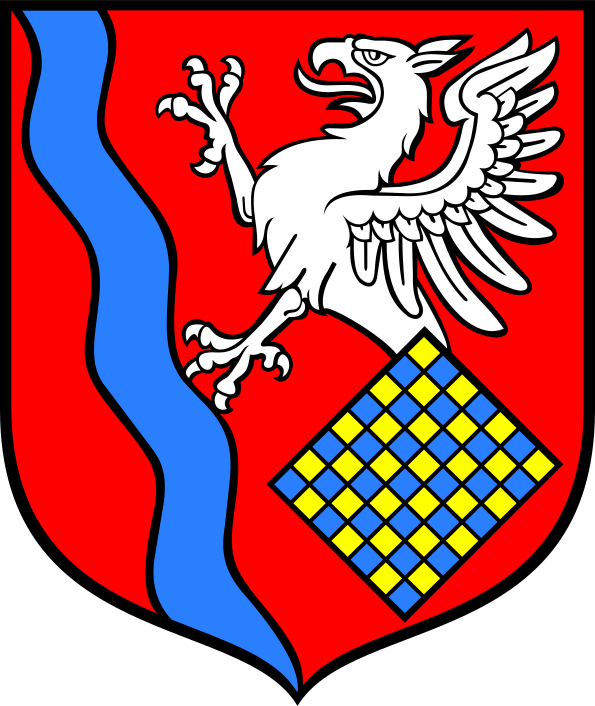
The Skittle Money of Sławno


Every year the town of Sławno (Schlawe) had to pay the town of Darłowo (Rügenwalde) a levy known as the Bozelgeld, the skittle money. Where that strange debt came from, the people of Sławno told like this: with a cruel count, a clever burgomaster’s daughter, a duke who did not separate his words, and a head that rolled across the market square.


1 The count of the old castle
Many hundreds of years ago there stood in the village of Sławsko (Altschlawe), right by the Wieprza (Wipper), a castle. In it a count lived as a wicked robber knight. Every year he carried off a certain number of young maidens from the town of Sławno and locked them up in his castle. And he was so cruel that if in any year he did not get the full number, he had all the others beheaded.
For a long time the burghers endured this outrage, for they could not stand against the dangerous knight. Mothers kept their daughters indoors, fathers lay awake, and every spring the town watched the road from Sławsko in fear. At last it became too much for them. They gathered to take counsel on how to be rid of their misery and distress. But they could find no means and had to part again without a plan.
2 The hazel wood
Now the burgomaster of Sławno had a daughter who was as beautiful as she was clever and good. When she learned what the matter was, she quickly thought of a plan to catch the wild count without great danger. Near Sławsko, towards the castle, lay a little wood of hazel trees. She would go there all alone, as if looking for nuts. The knight would see her and hurry over to seize her. The men of Sławno were to hide in the bushes, fall upon him and capture him.
The burgomaster loved his daughter dearly and would not agree to her plan; it seemed far too dangerous for her. But in the end he had to give in.
Everything went just as the clever girl had imagined. She walked among the hazels with her basket and stooped for the nuts, while in the bushes all around the men waited with bated breath. The knight saw her and came out of the castle with only a small band to seize her. So the burghers easily overpowered him. They put him in chains, led him in triumph into the town and threw him into a deep dungeon.
3 Kop af nich loat läwen
Then they sat in judgement over him and condemned him to death. But they were not allowed to carry out the sentence on their own authority; the duke in Szczecin (Stettin) first had to sign it. So they sent it to Szczecin. Now it happened that the duke was a good friend of the robber count. So beneath the sentence he wrote the words: Kop af nich loat läwen.
He wrote them without any mark between the words, so that they had a double meaning and could be taken whichever way one liked. With a comma after af it means: head off, do not let him live. With a comma after nich: head not off, let him live.
The burghers read it in their own favour and had the knight beheaded. In their great joy they even went so far as to hold a day of celebration and bowl the severed head about the market square, which in Low German is called bozeln.
When the duke in Szczecin heard of it, he grew furious. He now explained his words differently and imposed a fine on the town, to be paid to Darłowo, towards which every burgher had to contribute an equal share. From the bowling with the knight’s head the fine was ever after called the Bozelgeld.
- The Smoke under the Women’s Pews: the Fire of Pyrzyce · Pyrzyce
- The Ina and the Black Dog of Goleniów · Goleniów
- The Robber Castle near Łoźnica · Łoźnica

Heimweer.be · Europees Erfgoed Bewaard

