
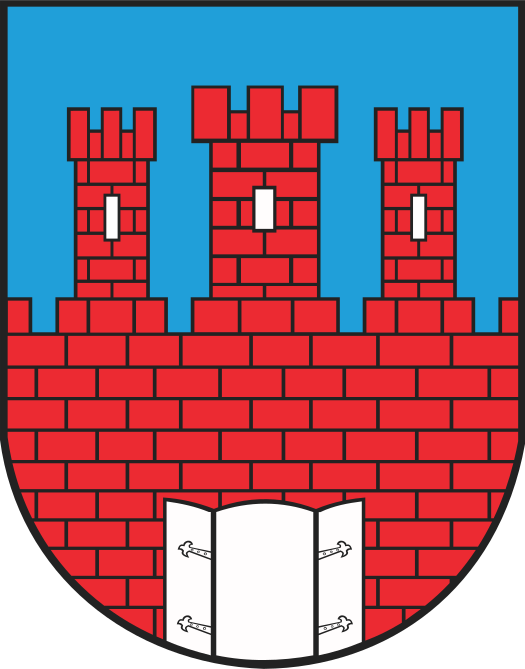
The Giant Spider of Pajęczno


Pajęczno is a small, old town in the land of Wieluń, among fields, woods and wet meadows. Say the name aloud and you hear in it the Polish word pająk, spider. That is no accident, say the people there, and they tell a story about it that has long passed from mouth to mouth.


1 The thing in the shadow
Long ago, when the houses of Pajęczno were still low and made of wood, something lived in the town that did not belong there. It was a spider, but not a spider of the kind you know from the corner of a barn or the window of a stable. It was so immensely large that people walked around it in a wide arc, and whoever had seen it once dreamed of it for weeks afterwards.
No one could kill it, and no one could drive it away. So the townsfolk did what frightened people often do: they bought themselves peace. The whole town had to feed the spider. Day after day, whatever the creature wanted had to be brought, and it wanted no small amount. What lay in the storerooms, what might have been sold at the market, what the children might have eaten themselves, all vanished into the shadow where the monster waited.
It was a heavy burden for the townspeople. The poor grew poorer, and even those who were well off felt the strain. At the market people spoke of it in low voices, with a glance over the shoulder, for no one quite knew how far the spider could hear or see.
2 A townsman with courage
So it went on for a long time. Years, perhaps; the tradition does not say exactly, only that it was endured for long. People grow used to many things, even to fear, and those who grow up with it stop asking, after a while, whether things could be otherwise.
But somewhere in the little town lived a man who would no longer accept it. He was no knight and no hero from a song, just a townsman of Pajęczno, only a little braver than the rest. Where his neighbours bowed their heads and set out the next basket, he stood up and went to the monster.
How exactly he did it, with what weapon and after how long a fight, the tradition does not tell us. It says only that he killed the spider. We may imagine how the town held its breath that evening, how the first people crept closer, and how the word went from door to door that it was over. No more baskets, no more shadow, no more whispering at the market.
3 The door of the old church
The monster was dead, but the people did not want simply to forget it. With the skin of the spider they covered the doors of the old parish church, or so it is told. Whoever entered the church walked past the proof that the town had been freed of its burden, and the children who had not lived through it could feel with their own hands that the story was true.
And from that spider, people say, the town also took its name: Pajęczno, the place of the spider. Linguists too derive the name from the word pająk, though they point out that the word once also meant small creatures living on the water, in wet and marshy country such as this.
That old church is gone. Over the centuries Pajęczno was struck again and again by great fires that consumed houses, records and the house of God as well. But the story of the spider did not go up in flames. It was told on, from parents to children, until it found its way into Siemieński’s book, and in Pajęczno it lives on still.
- Boruta, the Devil of Łęczyca · Łęczyca

Heimweer.be · Europees Erfgoed Bewaard

