
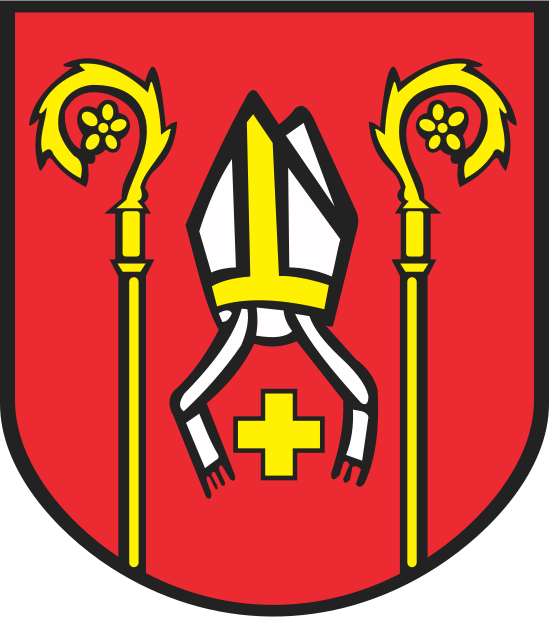
The Hunting Lord of Czerwona Wieś


Czerwona Wieś is a small village in the south of Greater Poland, in the commune of Krzywiń, among fields, woods and damp meadows. On a hill by the village there once stood a castle. Nothing of that castle remains, yet people still talk about the lord who lived there, above all when darkness falls and the mist rises from the marshes.


1 Hunting during High Mass
The lord of the village and of all the lands around it was a godless and cruel man. Nothing in the world mattered more to him than the hunt. He loved it so passionately that he did not stay at home even on the greatest feast days.
While the bells were ringing and the people were hearing High Mass in the church, that was exactly when he liked best to hunt through the forests. Behind him rushed a whole pack of hounds, and with him went the beaters, peasants he had forced into this service by violence. They would rather have been in church, but whoever refused felt the whip. So on the holy days the woods of Czerwona Wieś echoed not with prayer but with the blare of horns, the baying of hounds and the crack of breaking branches.
2 Bread from the hill
When the hunt was over, the lord had a fixed custom. He stood on the hill on which his castle stood, and from there he threw bread down to the hounds and to the people who had hunted with him. Below they crowded together, worn out and hungry after a day in wood and marsh.
But here too the cruelty of the man showed itself. If the people let the hounds beat them to it and the animals seized the bread first, he had the people beaten. If the people snatched the bread before the hounds could get it, he had the hounds beaten. So the bread became a fight between man and beast, and the lord watched from above.
The parish priest admonished him more than once to give up this inhuman sport, but in vain. At last his shepherd of souls warned him one final time. If he did not mend his ways, he said, death would soon come for him.
3 The hunt that never ends
Those words, too, went unheeded. The very next Sunday the obsessed hunter rode into the forest with his hounds again. But when he came back from the hunt he fell gravely ill, and a few days later he was dead.
Soon afterwards the castle collapsed as well. Every trace of its owner’s former splendour vanished. The palace that stands in the village today was built only around 1845 and has nothing to do with that stronghold. What did remain was the memory of his punishment.
For to this day, in the marshes around Czerwona Wieś, people hear the thud of hooves, the shouts of beaters, the howling of hounds and the bang of shots. But as soon as the cock crows the phantoms vanish, and the nearby forest grows still and gloomy as a grave. Only on the hill where the castle stood a great glow sometimes appears, like the reflection of a fire, and it fills the villagers with dread.
And deep in the dense forest that belongs to Czerwona Wieś, people still point out the open grave of the cruel lord, as a reminder of his guilt and of his punishment.
- Lubrański, the Cruel Lord of Gosławice · Konin
- How Miłosław Escaped the Plague · Miłosław
- Lech and the Eagle’s Nest · Gniezno

Heimweer.be · Europees Erfgoed Bewaard

