
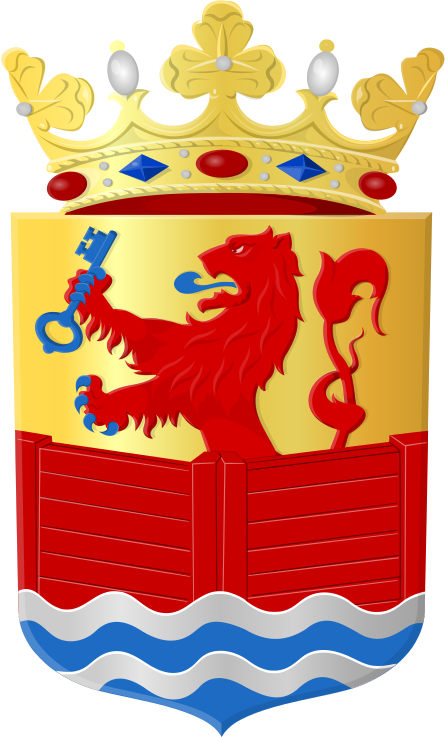
The Flying Dutchman of Terneuzen


Where the canal from Ghent reaches the Western Scheldt lies Terneuzen, a town of locks, docks and seagoing ships that slide past slowly, like floating apartment blocks. Yet the town owes its most famous inhabitant not to the port of today, but to a ship that never arrives anywhere. The Flying Dutchman, the most famous ghost ship in the world, has its home port in Terneuzen according to tradition, and its doomed captain Willem van der Decken is said to have been born and raised there. How a small fishing harbour on the Scheldt became the home port of a ship larger than its entire quay is a story in itself.


1 The curse at the Cape of Good Hope
It is Easter Sunday, somewhere in the seventeenth century. The weather is foul and the bells are calling to church, but captain Willem van der Decken is making his ship ready to sail. Whoever warns him that no Christian puts to sea on such a day is laughed away. He sets course for the East Indies, around the southern tip of Africa, the route of the great trading fleets.
Off the Cape of Good Hope a storm rises such as the oldest sailors have never seen. The crew begs him to turn back to Table Bay. Van der Decken refuses. In blind rage he seizes his helmsman and throws him overboard, and as he does so he roars the words that become his sentence: “God or the devil, I shall round the Cape, though I must sail until the Last Judgement.” Heaven takes him at his word.
Ever since, the ghost ship has wandered the oceans against wind and current. Whoever crosses the path of the Flying Dutchman can expect damage, shipwreck or worse. Sometimes the captain lowers a boat with letters for people who have been dead for centuries. And in some versions he may go ashore once every seven years, in search of a wife.
2 An English pen gives the ghost a home port
Stories of ghost ships are as old as seafaring itself, and towards the end of the eighteenth century the English versions acquired a Dutch captain, possibly an echo of the rivalry between the two seafaring nations. In May 1821 that captain was first given his name in the Scottish Blackwood’s Edinburgh Magazine: Vanderdecken. Of Terneuzen there was as yet no mention at all.
That changed with Frederick Marryat (1792-1848), English naval officer and widely read novelist. His novel The Phantom Ship, published as a serial from 1837 and as a book in 1839, made the little village of “Terneuse” the birthplace and home of Willem van der Decken. Marryat knew the region: in 1809 he took part in the English invasion of the Scheldt estuary, and his frigate Imperieuse shelled a coastal battery in the Margaretha polder near Terneuzen. According to some sources he even lived in the town for a while afterwards; the local historians of Terneuzen doubt it, and maintain that nobody knows why he chose this town of all places.
For the choice was anything but plausible. In the century in which the legend is set, Terneuzen was a small fishing harbour. The port lay on the site of the present Markt and was so narrow that it was closed off at night with a boom. An East Indiaman of forty metres could never have been based there; only after the digging of the canal to Ghent, between 1825 and 1827, did Terneuzen truly become a port town.
3 The town that embraced its ghost captain
Terneuzen could have waved its ghost away as English slander; the tale of a godless captain from the Dutch Republic is hardly flattering. The town did the opposite. In 1935 the publisher Arie Littooij rekindled interest with a booklet about the legend. Buildings in the Noordstraat and on the Havenstraat were pointed out as the captain’s birthplace and home, and around 1930 people still told each other that the birthplace was haunted.
From the nineteen sixties onwards Van der Decken appeared in the flesh, as a costumed ghost captain at markets and street fairs. In 1971 the De Vliegende Hollander Foundation was established, and on 11 May 1972 the town unveiled the monument by artist Piet Griep: the masts of the sunken ship rising from the water between Herengracht and Rosegracht. Tjaard de Haan wrote a song for the occasion, sung by Marie-Cécile van Moerdijk. At the four hundredth anniversary of its town rights, in 1984, Terneuzen officially adopted the slogan town of the Flying Dutchman.
Since 2005 a shanty festival bearing the ship’s name has been held every year, and in 2006 Wagner’s opera Der fliegende Holländer sailed into the harbour, performed at the Zeeland Nazomerfestival. Meanwhile the ghost ship sails on, from the Efteling theme park to Hollywood. But its home port, of that nobody in Terneuzen has any doubt, lies on the Western Scheldt.
- The Templars of Zaamslag · Zaamslag
- The Inkpot of Aardenburg · Aardenburg
- Willem Beukelszoon of Biervliet · Biervliet

Heimweer.be · Europees Erfgoed Bewaard

