
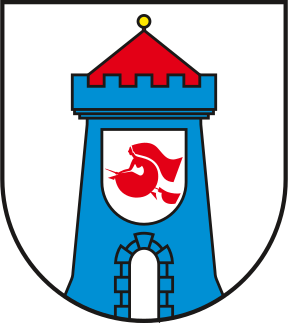
The Rosstrappe: Brunhilde’s Leap


High above the Bode gorge near Thale, on the north-eastern rim of the Harz mountains, a granite crag rises almost four hundred metres above the river. In the stone gapes a hollow that looks strikingly like a giant hoofprint. Harz tradition knows why: this is where the steed of the king’s daughter Brunhilde landed after leaping the chasm in mortal fear. The rock has been called the Rosstrappe ever since, and directly opposite lies the Hexentanzplatz. Gottschalck recorded the legend around 1800, and the Brothers Grimm included it in their German Legends.


1 Brunhilde’s Flight
In ancient times, when giants still ruled the mountains of Bohemia and the Harz, there lived a king’s daughter named Brunhilde. Her beauty was famed far and wide, and many a prince sought her hand. But the giant Bodo from the Giant Mountains had also heard of her. He appeared at her father’s court and demanded the princess for his wife. The king dared not refuse the mighty suitor, yet Brunhilde shuddered at the wild wooer and swore she would never be his.
One dark night she mounted her snow-white steed and fled westward, away from home and bridegroom. When Bodo discovered the flight at dawn, he leapt onto his own black giant horse and took up the chase. Over mountains and forests the hunt went on, for days and nights, and the distance grew ever shorter. The giant’s hoofbeats made the earth tremble as Brunhilde reached the heights of the Harz.
2 The Leap across the Bode Gorge
Suddenly the abyss of the Bode valley opened before her: a chasm many hundreds of feet deep, where the Bode foamed and raged over the boulders. Behind her Bodo came thundering on; she could already feel his hot breath on her neck. There was no choice left: fall into the giant’s hands, or dare the leap that no mortal horse had ever achieved.
Brunhilde spurred her steed. The noble animal gathered itself and flew in a mighty arc over the yawning depth. On the far side it came down, striking its hoof so deep into the granite that the print stands in the rock to this day: the Rosstrappe. But in that tremendous leap the golden crown slipped from the princess’s head and sank into the roaring river.
Bodo, blind with rage, forced his black stallion to the same leap. But the heavy giant horse fell short: horse and rider plunged into the gorge and vanished in the black depths of the river.
3 The Black Dog and the Crown
Yet Bodo did not drown like an ordinary mortal. In the depths he was transformed into a great black dog, condemned to guard Brunhilde’s golden crown for all eternity. It still lies at the bottom of a dark pool that the people call the Kreetpfuhl or Bodekessel. And the river, which until then had flowed nameless through the gorge, has borne the giant’s name ever since: the Bode.
More than once daredevils have tried to fetch the crown from the deep. Tradition tells of a famous diver who actually got hold of it and had almost brought it to the surface when an invisible force tore it from his hands. At his second attempt, after a long wait, only a red streak of blood rose from the water: the black dog suffers no robbers near his treasure.
Brunhilde herself is said to have ridden on unharmed and reached safety. Whoever climbs the Rosstrappe today sees the hoofprint in the rock, looks down into the dizzying Bode gorge and across to the Hexentanzplatz — and perhaps, they say in Thale, something golden still glitters deep below in clear weather.
- The Finkenherd of Quedlinburg · Quedlinburg
- The Roland of Halberstadt · Halberstadt
- The founding of Wernigerode · Wernigerode

Heimweer.be · Europees Erfgoed Bewaard

