
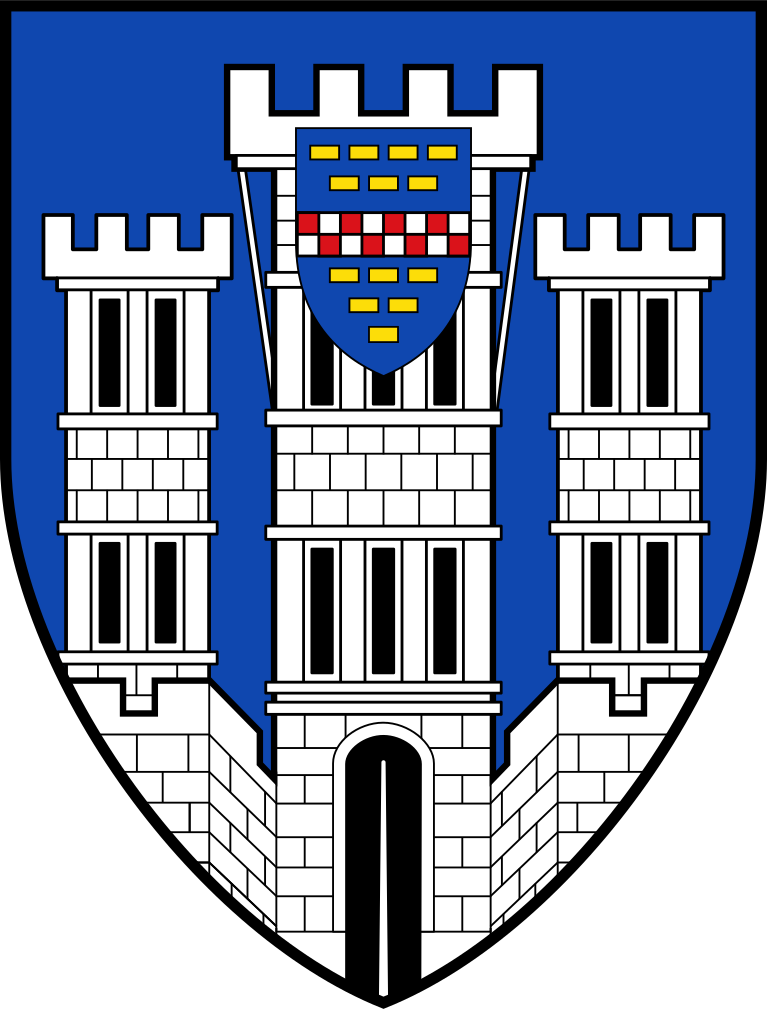
Konrad Kurzbold and the Lion of Limburg


High above the Lahn, on a limestone rock the river loops around, stands the cathedral of Limburg: painted red and white, with seven towers — more than any other church in Germany. Whoever steps inside and turns towards the north transept finds a stone table tomb there. On the slab lies a young man with open eyes, wreathed in acanthus leaves, and at the foot of the grave a lion of stone keeps watch. It is the monument of Count Konrad Kurzbold, who in the year 910 founded the collegiate church of St George on this rock — and about whom the town has told its finest stories ever since.


1 The count they called Kurzbold
Konrad was the son of Eberhard, count of the Niederlahngau, and his wife Wiltrud. When his father died in 902, Wiltrud fled with her sons into the lands of Eberhard’s brothers on the lower Lahn. There Konrad took up what could still be inherited of his father’s authority. He was a Conradine, a cousin of King Konrad I, and in the end he would see three kings come and go.
His nickname is a riddle people liked to solve for themselves. Kurzbold: short and bold. The first part referred to his build, rather small for a nobleman; the second comes from the Old High German word «bald», meaning brave. Tradition in the Lahn valley turned it into a portrait everyone knew: a small man with a chest like a smith’s bellows and shoulders as broad as a doorpost, who on horseback barely rose above the mane, but whom nobody challenged twice.
Ekkehard IV of St Gall, writing almost a hundred years after Konrad’s death, called him a new David. He told how this small count struck down a huge, boastful Slav as the shepherd boy once felled Goliath, and how later, travelling with King Otto I, he killed an attacking lion before the king had even drawn his sword. From that day the lion has belonged to him as the rock belongs to his church.
2 The rock Lintburk and the year 910
In February 910 King Louis the Child granted Konrad an estate, with express permission to use it for a church he wished to build on a hill called Lintburk. That hill is the limestone rock above the Lahn; that church became the collegiate foundation of St George. It is the first appearance of Konrad Kurzbold in written history, and it is at the same time the birth certificate of a town, for Limburg grew up around the foundation.
Why he founded it, the legend knows better than the charter. Konrad, it says, never married. He had no son to carry his name onward, so he chose a church as his heir and a holy knight as protector. And, they tell in Limburg, he kept women away from his foundation: no woman might cross the threshold of the chapter yard, and apples too he would not see on the table of his canons. Ekkehard noted this aversion to women and apples almost a century later; scholars such as Wolf-Heino Struck read something else in it, namely a man who stayed unmarried for a long while and who, in the quarrel over celibacy, warned his clergy of the Fall of Man, of the apple. Not to be taken literally, then. But in the town the story stayed standing, more stubbornly than many a charter.
His greatest feat of arms still lay ahead. On 2 October 939, near Andernach, together with his cousin Udo of the Wetterau, he defeated the rebel dukes Eberhard of Franconia and Giselbert of Lotharingia. Otto I rewarded him with an estate for his Limburg foundation.
3 The tomb three centuries younger
Konrad Kurzbold died on 30 June 948 and was buried in the middle of the choir of his own church of St George. The church that stands above him today, however, he never saw. The present cathedral of St George was consecrated only in 1235, late Romanesque in build, with early Gothic forms, the Rhenish transitional style at its most beautiful, red and white against the sky above the water.
From that same year comes the table tomb as well, almost three centuries after the death of the man who lies beneath it. The grave slab is carved like an open coffin. The figure lying in it shows Konrad not as a greybeard but as a man of about thirty, with open eyes and wreathed in acanthus leaves: an image of life and immortality, of eternal youth. The feet of the table tomb rest on a ground slab, and beneath it lie his bones.
After the liturgical changes of the Second Vatican Council the monument first moved up to the gallery and finally found its permanent place in the northern transept. There it still stands, and there the lion lies too — the beast the little count struck down, so the legend says, before a king could draw his sword. Whoever looks up at the cathedral in Limburg sees seven towers above the Lahn and thinks of the man who was small, broad-shouldered, unmarried and bold enough to begin a town.

Heimweer.be · Europees Erfgoed Bewaard

