
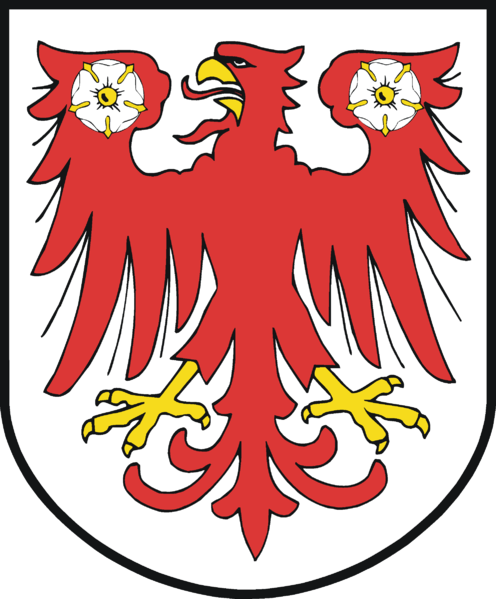
Grete Minde and the fire of Tangermünde


Tangermünde stands high above the point where the Tanger flows into the Elbe, on the edge of the Altmark. A small town with a large history: imperial residence, Hanseatic town, to this day almost completely enclosed by a wall of red brick. One name has never come loose from it: Grete Minde. She is said to have set the fire that reduced Tangermünde to ashes on 13 September 1617. Research today assumes she did not.


1 The imperial town on the Elbe
The castle above the river mouth is mentioned in 1009 by the chronicler Bishop Thietmar of Merseburg as «civitate Tongeremuthi»; the town itself first appears in a charter in 1275. Whoever held that rocky terminal moraine collected the Elbe tolls, and that made Tangermünde rich enough to become a margravial residence.
From 1373 to 1378 it was the second seat of Emperor Charles IV, who in 1373 made his twelve-year-old son Wenceslas elector of Brandenburg and had the castle extended into a residence. On the castle he founded a house of Augustinian canons and assigned them the parish church of St Stephen as a source of income.
The heyday was the fifteenth century, when the town belonged to the Hanseatic League. Then the town gates and the town hall rose in north German brick Gothic, and St Stephen’s was rebuilt as a Gothic hall church. The east wing of the town hall, of 1430, is attributed to the master builder Hinrich Brunsberg; its twenty-four metre show wall with free-standing tracery rosettes counts as a masterpiece. After the rebellion against the beer tax in 1488 the residence moved for good to Cölln on the Spree.
2 The fire and the trial
On 13 September 1617 Tangermünde burned down almost completely. The fire took the medieval town hall with it and badly damaged St Stephen’s: the spire of the north tower crashed down, and pulpit, organ, choir stalls and gallery were lost.
Suspicion fell on Margarete von Minden, known in the town simply as Grete Minde, born about 1593. Her father, Peter von Minden, had been banished from the town for manslaughter; almost nothing is known of her mother, which is why Grete later counted as an illegitimate child. After her father’s death she could not prove her descent, and her attempts to claim her share of the inheritance failed. In 1616 she married in Stendal Antonius «Tönnies» Meilahn, a vagrant without income. She herself earned a meagre living as a herb woman and fortune teller.
That was enough: a poor woman with an open account against a family of standing. Revenge for the withheld inheritance was named as her motive. She was condemned to death on 13 March 1619 and executed on 22 March, having confessed under torture.
In 1883 the jurist Ludolf Parisius of Gardelegen was the first to study the trial records thoroughly. In «Bilder aus der Altmark» he called the sentence a judicial murder. His finding still stands: she is regarded today as innocent. The council of Tangermünde was also the court, and a recent study concludes that this same council drew up the opinion permitting torture in a manipulative way. Some legal historians hold that the trial was conducted correctly by the forms of the age, but on the core there is agreement: an impoverished woman threatened the established Minde family in its name and its property, and a shaken town needed someone to blame.
3 Fontane, and the town that rose again
Theodor Fontane came to Tangermünde in 1878 to look into the case. What he wrote is not history. In his novella «Grete Minde. Nach einer altmärkischen Chronik», published in 1880 by Wilhelm Hertz in Berlin, Grete herself sets the fire out of bitterness over the inheritance denied her, and dies with the burning church tower. Fontane took her side against the hardness around her, but he made her an arsonist, and it is that image which has clung to her — far more firmly than the records. Three years later came Parisius’ vindication. The novella won.
The town itself rose again, in brick and half-timber. On the sill of the house at Kirchstraße 23, dated 1619, a fire inscription names 13 September 1617. The north tower of St Stephen’s received its baroque cap only in 1714 and at 87.5 metres is the tallest church tower in the Altmark; inside stands the organ built by Hans Scherer the Younger in 1623 and 1624, a summit of Renaissance organ building.
The town wall still encloses the old town almost entirely, ten to twelve metres high towards the Elbe, with the Hünerdorfer Tor, the Elbtor and the Neustädter Tor, whose rectangular tower dates from about 1300 and whose round tower with projecting wall walk from about 1450. In front of the historic town hall, where the trial was held, the life-size bronze by Lutz Gaede has stood since 22 March 2009. It shows her in chains and bowed: not Fontane’s arsonist, but the prisoner of the records.
- The Sunken Mill of the Arendsee · Arendsee
- Master and Apprentice at the Uenglinger Gate · Stendal

Heimweer.be · Europees Erfgoed Bewaard

