
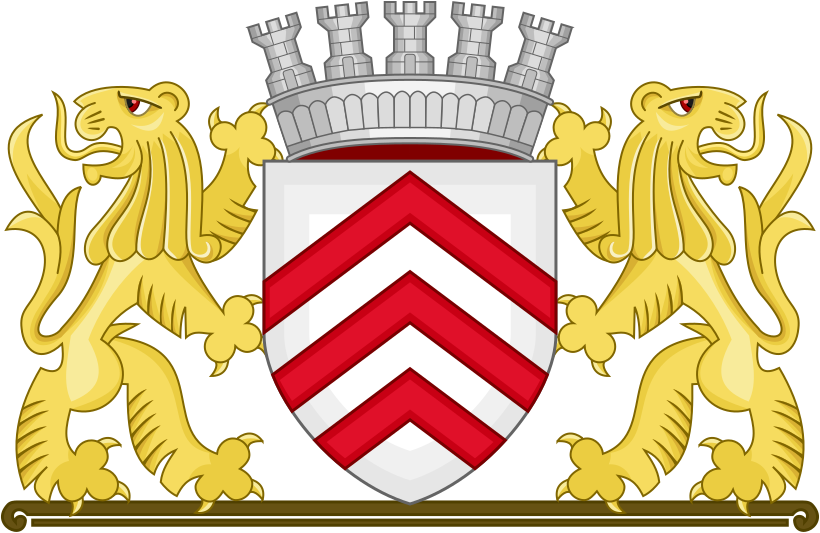
Saint Gummarus of Lier


On the banks of the Nete, where willows still bow as if listening, there once lived a man whose name became inseparable from the city of Lier. Saint Gummarus was knight, pilgrim and miracle-worker — a soul who made trees grow anew and called springs from the earth, and whose sacred friendship turned pilgrim staffs into mighty oaks.


1 The Knight of Emblem
In the year seven hundred and sixty-four, Gummarus was born in the village of Emblem, where green countryside stretches between waters and forests. He was a knight of standing, serving at the court of Pepin the Younger, where he distinguished himself through chivalry and unwavering faith. Yet in his heart grew a burning desire for something higher, for a spiritual adventure that would purify his soul. One morning, when the sun poured gold across the Frankish realm, Gummarus resolved to leave his princely life behind.
With only a pilgrim’s staff and the garb of a penitent, he departed the court. His destination lay far away: Rome, the holy city where Saint Peter himself had shed his blood. The road would be long, full of weariness and trial, but Gummarus walked it with the courage of one who knows that God’s hand guides him.
2 The Miracle at the Nete
After many weeks of wandering, Gummarus came to the banks of the Nete, a river that winds its way through Brabant. Here, among willows and reeds, he pitched his tent, seeking rest and contemplation. But the next morning he beheld a tree growing at the water’s edge, directly in his path. In his simplicity, Gummarus took his axe and felled the tree, without thought of asking permission.
Soon the owner of the land came rushing forth, wild with fury at the destruction of his tree. Yet Gummarus, filled with contrition and penance, did what no mortal can ordinarily accomplish. That night, under the stars, he raised the tree upright and bound it fast with his own pilgrim belt. When dawn broke, the tree stood not only upright but grew anew, its wounds sealed, as if the miracle of creation itself had been repeated. The farmer fell to his knees and begged forgiveness.
Not long afterward, Gummarus encountered another pilgrim on those banks: Saint Rombaut, a holy soul likewise journeying toward Rome. The two men soon knew each other as brothers, and for many hours they sat together, speaking of God’s boundless love and the mysteries of faith. Their discourse was so elevated, so aflame with godly devotion, that the very earth seemed to listen. And when they would finally take their leave, their pilgrim’s staffs would transform into great, mighty oaks, a monument to their sacred friendship.
3 The Spring and the Blessings
Gummarus journeyed onward through the land, and everywhere he came, he left traces of wonder behind. In a village where thirst tormented the people, he struck his staff upon the ground, and at once crystal-clear water sprang forth, a spring that would thereafter supply the villagers with life. The sick who came to him were healed—not by medicine or herbs, but by the touch of his hand, by the blessing that flowed from his lips.
When Gummarus finally arrived in Lier, he felt that his pilgrimage drew to a close. Here, where the Nete still winds through the green land, he built himself a cell. The people from the surrounding villages came to him for counsel and blessing. He became their patron saint, their protector against fractures and curses, against the afflictions of the body and the wounds of the heart.
When Gummarus, around the year seven hundred and fourteen, closed his eyes for the last time, all knew that a great holy light had departed from the world. Yet his veneration would live on in Lier, his name forever invoked by those who suffered breaks or the pain of broken bonds. And what the prosperous city would grant him would be but a faint reflection of what he had given to the people: the assurance that the Divine is merciful and near, even to the least among us.
- The Sheepheads · Lier
- The Cursed Farm of Herentals · Herentals
- The Betrothed of the Cathedral · Antwerpen

Heimweer.be · Europees Erfgoed Bewaard

