
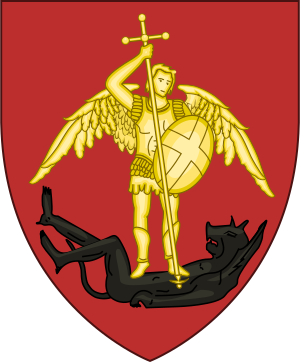
Jan van Ruysbroeck and the City Hall Tower


In the heart of Brussels stands a tower that reaches beyond the clouds, a masterpiece of Brabantine Gothic that has defied centuries. Yet beneath the beauty of this tower lies a dark legend: that of architect Jan van Ruysbroeck, who would have abandoned his work as a failure and thrown himself from its top. But what is truth, and what is merely tale?


1 The ambitions of a master
In the year of our Lord 1402, by some accounts, Jan van Ruysbroeck was born in the Southern Netherlands. He would grow up in a time when Gothic art unfolded like a flower in full glory — where pointed arches and ribbed vaults were not merely buildings, but dreams carved in stone. From youth, Jan felt the call of the building craft flowing in his blood.
His father was a mason, his grandfather likewise. Three generations of men who used their hands to erect things that would endure forever. Jan learned the craft from within: how stones related to one another, how weight flows, how an arch could perfectly lock into place without collapsing. But Jan possessed more than craft — he possessed vision. Where others saw a wall, he saw poetry.
Through his talent and ingenuity, he was appointed in 1448 as architect of Brussels City Hall. It was the greatest honor a master builder could receive: the building would become the heart of Brussels, the symbol of the city’s power and prosperity. And atop this building, the plan determined, would rise the most spectacular tower of the Low Countries — a tower that would point like a spear toward heaven.
2 The construction of a masterpiece
Jan van Ruysbroeck threw himself with fire and devotion into his task. Year after year, the people of Brussels watched as stone was laid upon stone, as the building took shape. The tower — which would be his namesake for all eternity — grew from the City Hall upward like a giant from a dream. It would be 96 meters tall, adorned with all the refinements that Brabantine Gothic could offer: elegant crenellations, delicate ornamentation, pointed arches that seemed to reach toward infinity.
Months became years. Craftsmen worked from sunrise to sunset. It was a ballet of precision: every stone had to fit perfectly, every angle precisely right, or the monumental structure might crumble. Jan van Ruysbroeck walked the building site each day, inspecting every detail himself, managing to coax perfection from raw stone. Brussels began to take pride in this creation — a tower that would speak of their power and beauty for ages to come.
But in 1449, when the work was nearly finished, something occurred that would haunt Jan van Ruysbroeck for the rest of his life. When the vertical lines of the completed tower were measured, they discovered it: the tower was not perfectly straight. It leaned very slightly off-center — a deviation of only a few centimeters, but present nonetheless. It was the sort of detail that most people would never notice, but Jan, the perfectionist he was, could never ignore.
3 The shock of imperfection
The legend says that Jan van Ruysbroeck’s face grew pale when he was told of the asymmetry. They say he did not eat for weeks, did not sleep, did not speak — that he did nothing but stare at his tower, gazing at that slight deviation which no one else would ever perceive, but which he saw every day as a wound upon his soul.
For Jan van Ruysbroeck was an artist, and for artists imperfection is the greatest failure. He had promised to build the most beautiful tower of the Low Countries, and he had kept that promise (almost). But almost was not enough. For a man like him, who had dedicated his entire life to perfection, this flaw felt like betrayal by his own hand.
According to the legend, Jan van Ruysbroeck made a decision. He climbed one night to the top of his tower, to that height of 96 meters, and looked down at the sleeping city below him. The stars were bright, the moon shone on the roofs of Brussels. And there, in that silent moment, he would have, the legend says, spoken to himself — to the dream he could not fulfill. How could an architect who could not make his own work perfect continue to live?
4 Legend and truth
What happened afterward is shrouded in the mists of history. The legend would have it that Jan van Ruysbroeck threw himself from the top of the tower, that his body was found on the stonework below, that his blood and brain mingled with the stone he had spent so much of his life shaping. A classic tragedy: the artist destroyed by his own impossible standards.
But historians tell a different story. There is no official account of Jan van Ruysbroeck’s death. There exists no evidence that he truly cast himself from the tower. In reality, Jan van Ruysbroeck likely died simply, as all people die — of old age, of illness, of exhaustion. He died in 1485, at what according to some sources was an advanced age.
As for the tower’s asymmetry itself: architects who examined it later determined that the lean was likely intentional. Medieval master builders sometimes introduced small asymmetries as hidden signatures, as greetings to their God, or simply because the building site was not perfectly level. Or perhaps that deviation already existed in the foundations, and Jan had to work around this constraint as an artist works around limitations.
- Saint Gorikus, Founder of Brussels · Brussel
- The Legend of Saint Gudula · Brussel
- Our Lady of the Boat · Brussel

Heimweer.be · Europees Erfgoed Bewaard

