
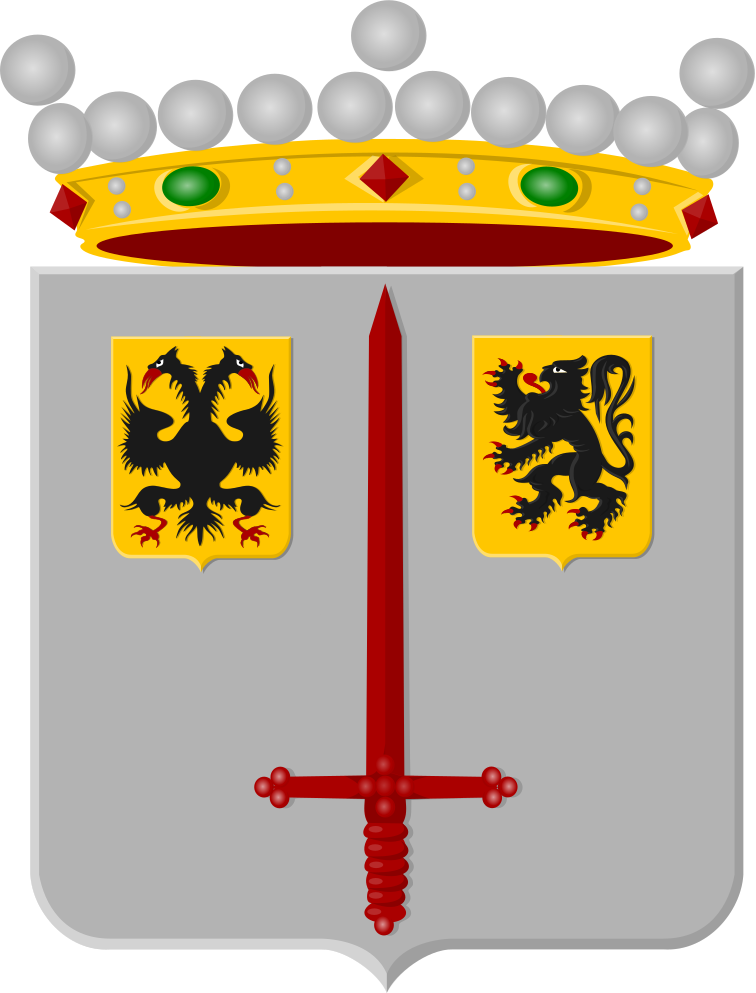
The Turners


Aalst has two nicknames. The first — onions — everyone knows. But the second is older and more mysterious: turners. Its origin lies in the sixteenth century, somewhere between rebellion and submission, between Ghent and the emperor.


1 Ghent in revolt
In 1539, Flanders was ablaze. Not literally, but politically. Governess Mary of Hungary, sister of Emperor Charles V, demanded new taxes from the Flemish cities to finance the war against France. Most cities paid grudgingly but obediently. Ghent did not.
Ghent was proud, Ghent was headstrong, and Ghent refused. The people of Ghent invoked ancient privileges that exempted them from taxes without their consent. It was a bold move — one did not defy a Habsburg with impunity — but the Ghentenars had a plan. If they could win the support of the other Flemish cities, the emperor would have to listen.
And so the Ghent envoys travelled to Aalst, the neighbouring city on the Dender, to seek allies. The message was simple: support us, and together we stand strong against the crown.
2 Aalst turns
The people of Aalst listened politely to the Ghent envoys. They nodded, they drank along, they promised to deliberate. And once the envoys had departed, the people of Aalst did precisely the opposite of what Ghent had hoped.
Rather than joining the revolt, they chose the emperor’s side. More than that: they voluntarily paid extra taxes and even offered Charles V artillery as a token of loyalty. It was a razor-sharp calculation. The people of Aalst knew that Ghent would lose — nobody defeated a Habsburg — and they wanted to be on the right side when the reckoning came.
The Ghentenars were furious. They had counted on Aalst’s support and received a stab in the back instead. ’Turners!’ they cried. ’Traitors! Weathervanes that turn with every wind!’ It was the first time the word was uttered, and it would never disappear again.
Ghent lost. In 1540, Charles V came to Ghent in person to punish the city. The privileges were revoked, the city gates torn down, and the people of Ghent had to beg for forgiveness on their knees with a noose around their necks — hence their own nickname: noose bearers. Aalst watched and said nothing.
3 Master Deynoot
But there is another version of the story, and it is more colourful. According to legend, Charles V also visited Aalst in 1540, after his reckoning with Ghent. The city had to prepare a welcoming speech, and the honour fell to Master Laurens Deynoot, a respected citizen and able orator.
Deynoot had practised his speech for days. He knew every sentence by heart, every bow, every gesture. But when he stood before the emperor — with the entire city government behind him and thousands of spectators on the Grand Market — the inevitable happened. His mind went blank. The words were gone.
Deynoot began to stammer. He repeated the same sentences, stopped, started again, and meanwhile literally turned on his axis — spinning from left to right, searching for footing that was not there. The audience watched open-mouthed. The emperor, so the legend has it, smiled broadly and said: ’What turners you are!’
Whether Charles V actually said this, nobody knows. The municipal archives show that Deynoot was richly rewarded for his speech afterwards, which suggests it was not so bad after all — or that the city consoled him for his humiliation. But the story stuck, and so did the nickname.
4 Turning as an art of living
Today, Aalst wears the name ’turners’ with the same nonchalance as the name ’onions’. The two nicknames exist side by side like twins who never quarrel. The onion stands for the earthy side of Aalst — trade, the market, honest work. The turner stands for the clever side — calculation, survival, knowing when to bend and when to stand tall.
For that is what the people of Aalst did in 1539: they turned. Not out of cowardice, but out of shrewdness. They saw which way the wind was blowing and chose the side that would save their city. That the Ghentenars were angry about it was understandable. But five centuries later, Aalst still stands, unscathed, with its Grand Market and its carnival and its two nicknames like two medals on its chest.
And if you ask someone from Aalst whether they would rather be an onion or a turner, they shrug and say: ’Both. Sometimes you have to peel, and sometimes you have to turn. It depends on who is standing in front of you.’
- The Castle of Damnation · Aalst
- The Foot Burners of Aalst · Aalst
- The Bewitched Stable of Aalst · Aalst

Heimweer.be · Europees Erfgoed Bewaard

